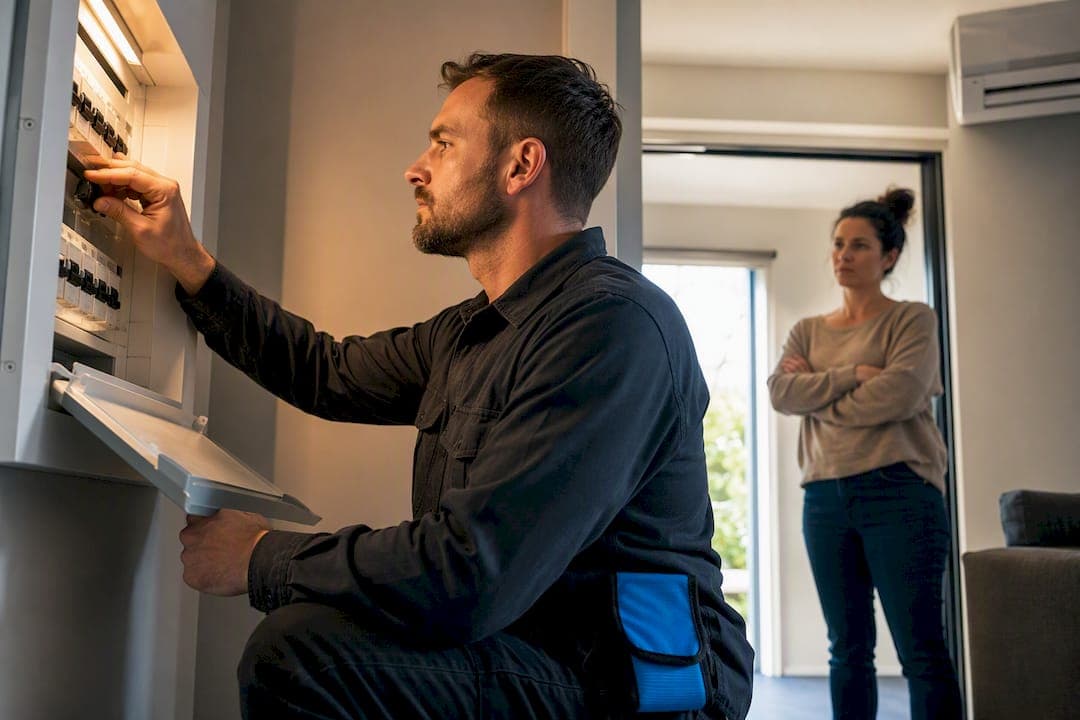
If your air conditioner is sparking, smoking, leaking into the ceiling or has cut power repeatedly, that qualifies as an emergency and warrants an immediate call to a 24/7 provider. If you feel an electrical shock from any part of the unit, switch off power at the safety switch if it is safe to reach and contact your electricity distributor before calling a technician. Tenants whose rental provider cannot be reached may have the right to arrange the repair themselves.
TL;DR:
- Emergency air conditioner issues include sparks, smoke, leaks into ceilings, or system shutdowns, requiring immediate professional attention.
- Emergency callouts have higher costs, with fees covering travel, diagnosis, and surcharges for after-hours or public holidays, and response times vary by location.
- Tenants can arrange repairs themselves if rental providers are unreachable in emergencies, but must keep detailed proof and adhere to jurisdiction-specific reimbursement rules.
- Preparing detailed symptom descriptions, having access instructions ready, and asking for cost estimates upfront can significantly speed up the emergency repair process.
- Providers with stocked parts and on-call rotas, including AI-based triage options, improve the chances of immediate, first-visit repairs during emergencies.
Table of Contents
- How to tell if an air conditioner problem is an emergency
- What to expect from an emergency callout: fees, arrival windows and repairs
- How to schedule an emergency callout fast
- Special rules for tenants and how renters should proceed
- After-hours and triage options: on-call rotas and AI receptionists
- Author perspective: quick priorities when arranging an emergency callout
- If you manage properties or run a service: reducing missed emergency calls
- Sources
- FAQ
How to tell if an air conditioner problem is an emergency
Not every fault needs a call at midnight. A unit that is simply underperforming or making an odd noise can usually wait for a standard booking. The following signs mean the fault has moved into emergency territory:
- A burning smell, visible smoke or sparks from the unit or its wiring.
- Water leaking into ceilings, walls or light fittings.
- The system shutting down repeatedly within a short period.
- No cooling at all during extreme heat, particularly for very young, elderly or unwell occupants.
- Any visible electrical arcing or exposed wiring.
Residential tenancies authorities classify dangerous electrical faults and the failure of a supplied heating or cooling appliance as urgent repairs, which puts most of the list above squarely in emergency territory for renters as well as owners.
Pro Tip is not needed here, so skip.
If you feel a shock or see arcing, isolate power at the switchboard only if you can do so without touching the appliance itself, then stay clear and call your electricity distributor first.
What to expect from an emergency callout: fees, arrival windows and repairs
Emergency air conditioning repairs are priced differently to a scheduled service. Most providers charge a callout fee that covers travel and diagnosis, separate from the labour and parts needed to fix the fault, and after-hours or public holiday work typically carries a premium on top of that. Industry guidance on emergency repair costs confirms this structure is standard across the trade.
Arrival times vary with location, time of day and how stretched the local technician pool is during a heatwave. One metropolitan provider advertises emergency response windows of two to four hours in inner-city areas, alongside a standard callout fee and an after-hours surcharge, which gives a realistic picture of what to expect from a well-staffed operator. Outer suburbs and regional areas typically wait longer, especially when a part needs to be sourced.
On the first visit, a technician may apply a temporary fix, such as isolating a faulty component, to restore safety and some cooling, then schedule a follow-up for the permanent repair once parts arrive. This keeps the emergency visit shorter and cheaper than trying to complete a full repair on the spot.
- Ask whether the quote is a flat repair price or a callout fee plus hourly labour and parts.
- Confirm whether the after-hours surcharge applies to the whole job or just the initial callout.
Pro Tip: Ask for the total estimated cost range before the technician leaves home, not after they arrive, so there are no surprises on the invoice.
How to schedule an emergency callout fast
Speed depends on how much of the groundwork you do before you dial. Providers that keep commonly used spare parts stocked and run a staffed after-hours rota tend to resolve more faults on the first visit, but only if you give them enough detail to prepare.
- Confirm the area is safe: isolate power if the fault is electrical and you can do so safely.
- Note the unit's make and model, and describe the exact symptoms (noise, smell, leak, shutdown pattern).
- Have your exact address ready, along with any access instructions such as a gate code or key location.
- If you rent, mention that upfront so the provider or your rental provider's nominated repairer can be engaged correctly.
- Ask directly for an estimated time of arrival and the callout fee before confirming the booking.
A short phone script keeps the call efficient: "My split system is sparking and shut off twice in the last hour. I've isolated the power at the switchboard. I need an emergency callout today, and I'd like to know your ETA and callout fee before booking."
- Online booking forms can capture the same details in writing, which reduces back-and-forth on the phone.
- Some providers now use AI phone agents or 24/7 reception services to answer instantly and route the job to the next available on-call technician, rather than leaving you on hold.
Special rules for tenants and how renters should proceed
Renters are not left to fend for themselves when the air conditioner fails. Consumer Affairs Victoria classes dangerous electrical faults and the breakdown of a supplied heating or cooling appliance as urgent repairs, which obliges the rental provider to act quickly once notified.
If the rental provider or their nominated repairer cannot be reached within a reasonable time, tenants may be able to arrange the repair themselves and claim reimbursement, subject to a capped amount and jurisdiction-specific rules. To protect that claim:
- Record how and when you notified the rental provider, keeping texts, emails or call logs as proof.
- Get an itemised invoice from the technician, not just a total figure.
- Submit a written reimbursement claim within the timeframe your jurisdiction requires.
Check the tenancy agreement first. Many agreements list an emergency contact number and a nominated repairer, and using that contact directly is often the fastest route to a technician.
After-hours and triage options: on-call rotas and AI receptionists

Providers that handle genuine emergencies well usually run some form of on-call rota, where a rostered technician is on standby and calls escalate automatically if the first person does not answer. This escalation approach, similar to systems used in healthcare and facility management, keeps a job from sitting unanswered overnight.
AI phone agents and 24/7 reception services perform a narrower but useful job: they answer instantly, ask a set of triage questions to classify how urgent the fault is, then route the call to the technician currently on duty. This matters most outside business hours, when a missed call can mean a night without cooling or a safety risk left unresolved.
- On-call rotas with escalation rules reduce the chance a call goes unanswered.
- AI receptionists and answering services capture job details even when every technician is on another job.
- A provider that carries stocked parts in the van is more likely to complete the repair on the first visit rather than needing a return trip.
Author perspective: quick priorities when arranging an emergency callout
Safety comes before speed, and speed comes before cost. Confirm the fault is genuinely urgent, isolate power if it is safe to do so, and have your address, access details and a description of the symptoms ready before you call. Keep a record of the call, the technician's name and any invoice, because that record is what protects a reimbursement claim later. Paying a premium for a same-day fix is reasonable when the fault is dangerous, not when it is simply inconvenient.
— Lewis
If you manage properties or run a service: reducing missed emergency calls
Property managers and small air conditioning cleaning businesses face a different version of the same problem: a missed call at 10pm can mean a lost job and an unhappy tenant. Booking and management software designed for air-con cleaning businesses offers features to address exactly that gap.

- Online booking pages let customers request a job and describe the fault without waiting for someone to pick up the phone.
- Automated reminders and confirmations cut down on missed appointments and double bookings.
- Calendar integration keeps every technician's schedule in one place, which matters when an urgent job needs to be slotted in fast, as explained in this guide to Google Calendar appointment booking.
- Secure payments through Stripe let a customer pay on the spot once the job is done.
Operators can compare plans, including the Free plan and MyAirCare Pro at $199 per month, on the MyAirCare pricing page.
Sources
- Residential Tenancies Authority — emergency repairs
- Consumer Affairs Victoria — rental providers: gas and electrical safety
- Emergency air conditioner repair costs | Aust Climate Systems
- Emergency AC repair | ABC Air conditioning
FAQ
Is a broken air conditioner considered an emergency repair?
It is when the fault involves a dangerous electrical issue or the complete breakdown of a supplied heating or cooling appliance, which tenancy authorities classify as urgent. A unit that is merely underperforming or noisy usually does not meet that threshold.
How much does an emergency air conditioner callout cost?
Most providers charge a separate callout fee for travel and diagnosis, then add labour, parts and an after-hours or public holiday premium on top, as outlined in emergency repair cost guidance. Ask for a breakdown before confirming the booking so you know whether the quote is flat or itemised.
Can a tenant arrange their own emergency air conditioner repair?
Yes, if the rental provider cannot be reached within a reasonable time after being notified, tenants may arrange the repair themselves and claim reimbursement, subject to jurisdiction rules and a capped amount, as set out by Consumer Affairs Victoria. Keeping written notice, an itemised invoice and a timely claim protects that reimbursement.
What should I do first if I feel an electrical shock from my air conditioner?
Isolate power at the safety switch only if it is safe to reach, then stay clear of the unit and contact your electricity distributor before calling a technician. This safety step is recommended ahead of any repair booking.
How long does it take for an emergency technician to arrive?
Response times depend on location and demand, with one provider advertising windows of two to four hours in inner-city areas. Outer suburbs, regional areas and heatwave periods typically extend that wait.