
An online waiver for a trade business in Australia is a written term that the customer accepts electronically before the job, usually during booking. It records that the customer understands identified risks, such as access limits or the condition of existing equipment, and agrees to defined terms. It does not remove legal duties. For air-con cleaners, the strongest approach is a short, specific term accepted at the point of booking, with a record kept against the job. MyAirCare is built around that flow: online booking pages, customisable service terms, payments and job records in one place.
TL;DR
- An online waiver records the customer's acceptance of specific, plain-English terms. It does not replace safe work practices or insurance.
- Consumer guarantees, including due care and skill, cannot be excluded by agreement, so a waiver should never claim to cancel them.
- Electronic acceptance is generally recognised in Australia when the method identifies the signer, shows intention to agree and is reliable.
- Acceptance must happen before the booking is confirmed or paid. A waiver presented afterwards may not form part of the contract.
- Storing the accepted version, date, customer and job reference in the booking record makes the term easier to rely on.
Table of Contents
- What an online waiver means for an air-con cleaner
- What a waiver cannot do under Australian Consumer Law
- Unfair contract terms and why plain wording matters
- What to put in an online waiver for a trade service
- When the waiver must be presented
- Are electronic acceptance and e-signatures valid in Australia
- Recording and keeping the acceptance
- How the waiver fits into a booking flow
- Sample clause wording
- Starting out: why terms matter from the first booking
- Where MyAirCare fits
- Our perspective
- FAQ
- Sources
What an online waiver means for an air-con cleaner
A waiver, sometimes called a liability release or exclusion clause, is a term in which a customer accepts certain risks or limits what they can claim. Online, it is delivered as a tick box or an accept button in the booking flow, or as a document sent with a quote.
In trades, the useful version is narrow. It deals with risks that are real, identifiable and partly outside the operator's control. Legal commentary on waivers in Australia describes tailored clauses for identifiable risks in work at customer premises, such as access or customer-controlled site conditions and incidental property damage, while the business keeps its safety procedures in place.
For an air-con cleaning job, that typically means terms about matters like these:
- Safe, clear access to the indoor unit, the outdoor unit and the switchboard or isolator.
- Existing faults, such as a unit that is already leaking, noisy or not cooling, which are found or become visible during cleaning.
- Pre-existing damage to filters, fins, panels or drain lines, and the condition of older units.
- Pets, children and fragile items in the work area.
- Water, mould or debris that may be disturbed during a clean, and the reasonable cleaning and protection steps the operator will take.
- Cancellation, rescheduling and call-out terms.
Each item should match what actually happens on site. Written terms that do not match real practice are harder to defend and less useful to the customer reading them.
What a waiver cannot do under Australian Consumer Law
The most common mistake is a blanket statement that the business is not responsible for anything. Under the Australian Consumer Law (ACL), the national consumer protection law, services sold to consumers carry guarantees. The ACCC's guide for businesses says services must be supplied with due care and skill, be fit for a specified purpose and be supplied within a reasonable time where no time is agreed. The same guide states that consumer guarantees cannot be excluded by agreement.
The guarantees generally apply to services bought in trade or commerce for $40,000 or less, and to higher-priced services normally acquired for personal, domestic or household use. Residential and small commercial air-con cleans sit well inside that range.
In practice, a sound waiver does two things:
- It limits itself to specific risks, such as conditions the customer controls or pre-existing faults.
- It states that nothing in it excludes rights the customer has under the ACL.
The ACCC also notes that a recreational services exception in section 139A of the Competition and Consumer Act covers leisure and physical-risk activities. It is not a route for home-service trades, so a cleaner should not borrow wording from sports or fitness waivers.
Unfair contract terms and why plain wording matters
Standard-form contracts, where the customer accepts the terms without negotiating them, are covered by the unfair contract terms rules. Since 9 November 2023, unfair terms in covered standard-form consumer and small-business contracts can attract penalties. The rules apply to contracts made or renewed on or after that date and to terms varied or added after it. Small-business coverage uses thresholds of fewer than 100 employees or under $10 million in annual turnover.
The ACCC says a term may be unfair where it causes a significant imbalance, is not reasonably necessary to protect a legitimate interest, and would cause detriment if relied on. An online booking waiver is almost always standard form, so the test applies to it. A one-sided release that pushes all risk onto the customer is the type of term most exposed. A narrow clause tied to a genuine risk, written clearly, is in a stronger position.
What to put in an online waiver for a trade service
Legal guidance on waivers in Australia lists a consistent set of elements. A practical waiver identifies the business and the customer, describes the service, gives specific plain-English risk warnings and records the customer's acknowledgement. It also includes any safety rules, a proportionate release, a carve-out for rights under the ACL and privacy information.
For an air-con cleaning booking, a workable structure is:
| Element | What it covers | Example in an air-con booking |
|---|---|---|
| Parties and service | Who is supplying what, and at which address | Split-system clean, two indoor units, named business |
| Site conditions | What the customer arranges | Clear access to units and a working power supply |
| Existing condition | Faults that predate the visit | Units that were leaking or not operating beforehand |
| Specific risks | What may reasonably happen despite due care | Debris or water released from a heavily soiled unit |
| ACL statement | Rights that remain | Nothing here limits consumer guarantees |
| Privacy | How booking details are used | Contact details used for the job and reminders |
| Acceptance | How the customer agrees | An unticked box and the accept action |
Sentences should be short and specific. A paragraph of dense legal language is less likely to be read, and a term the customer did not have a real opportunity to read is weaker evidence of agreement.
When the waiver must be presented
Timing decides whether a waiver counts. Courts look at whether an exclusion was part of the contract when it was formed. An Australian legal analysis of recreational activity cases discusses appellate decisions where a waiver signed after payment or booking was not part of the contract.
The Arts Law Centre of Australia makes the same point for online terms: exclusions generally need to be part of the binding contract, and the customer must have notice of them when the contract is formed. It recommends an "I agree" click-through rather than a link that is hard to notice.
For an air-con cleaner, the order should be:
- The customer selects the service and time.
- The terms are shown on the same screen or in the same step.
- The customer ticks an unticked box to accept.
- Only then is the booking confirmed and any deposit or payment taken.
Terms placed in a footer link, or sent on the day of the job, rely on weaker evidence. A waiver handed over at the door, after the customer has already booked and paid, is the situation the cases warn about.
Are electronic acceptance and e-signatures valid in Australia
Electronic signatures are generally recognised. The Attorney-General's Department explains that they are accepted where the method identifies the signer, indicates their intention and is appropriately reliable, with consent where required. It lists a typed name, a personal mark, email acceptance, an online identity check, a signature image or an "I accept" box as possible methods depending on the circumstances.
The Commonwealth Electronic Transactions Act 1999 sets this out in section 10, covering identification, intention, reliability or proof, and recipient consent where relevant. The Act does not settle every state or territory rule or every document-specific exception, so the wording of the term and the process around it still matter. Businesses with unusual documents or higher-value work can confirm the position with a solicitor.
For a standard booking terms acceptance, a tick box tied to a named customer, a booking reference and a time stamp is a reasonable fit with those criteria.
Recording and keeping the acceptance
A waiver is only as useful as the record behind it. Guidance on online acceptance says the record should show which version was accepted, when, by whom and how, and that the customer had a real opportunity to read it. The practical checklist is:
- The exact text accepted, with a version number or date.
- The customer's name and contact details.
- The booking reference and service address.
- The date and time of acceptance.
- The method, for example a checkbox on the booking page.
The Electronic Transactions Act also permits electronic retention of records required under Commonwealth law where the information remains readily accessible and usable for later reference. Whatever the format, the record should be searchable by customer and job. Operators who handle customer details online also benefit from a basic IT compliance checklist for SMEs, covering backups and access control for the systems where bookings and acceptances are stored.
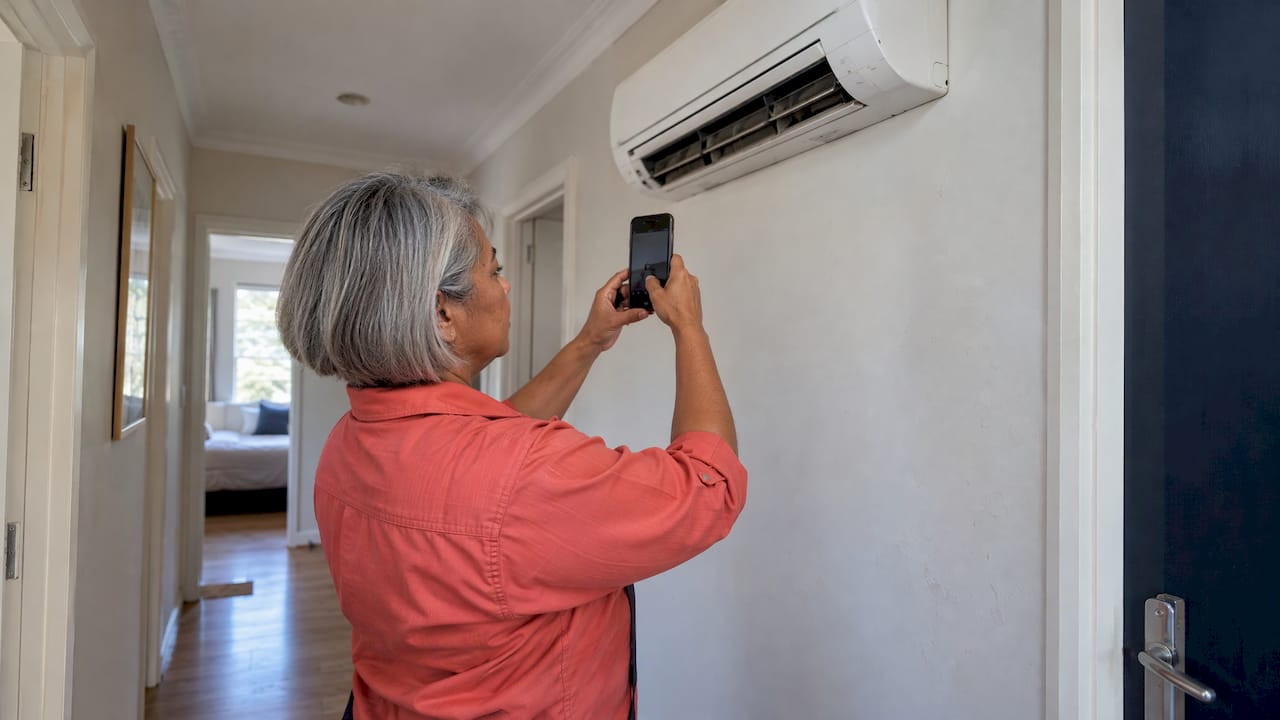
Before and after photos add a second layer. Documenting the condition of a unit on arrival and on completion supports the "existing condition" term with evidence of what was actually found. MyAirCare's mobile app includes before and after service documentation attached to the job, so the photos sit with the booking.
How the waiver fits into a booking flow
A waiver works best as part of the booking, not as a separate document chased up later. MyAirCare provides branded booking pages where customers book online at any hour, and the platform supports service-term customisation, so an operator's own terms can sit inside the booking process under the operator's own brand. Quotes, invoices, payments through Stripe and customer messages are held in the same system, which keeps the terms, the payment and the job history together.
The waiver sits alongside other terms that cause disputes in the same trade:
- Deposits taken at booking, covered in the guide to taking deposits online and in the piece on integrating payments with bookings to reduce no-shows.
- Call-out fees when a job cannot proceed, set out in the call-out fee policy guide.
- Partial refunds when part of a service is not completed, explained in the partial refund policy guide.
- Cancellation wording, covered in the cancellation email templates.
Keeping all of these in one agreed set of terms means the customer accepts them once, at the right time, and the operator has one record.
Sample clause wording
The following are drafting examples of the plain style that suits a booking page. They are illustrations only, and an operator with significant exposure can have a solicitor review final terms.
- Access: "The customer will provide safe access to all indoor and outdoor units and the power supply for the time booked."
- Existing condition: "Units are cleaned in the condition found. Faults that existed before the visit are not caused by the service. Any fault noticed will be recorded with photos and reported to the customer."
- Consumer rights: "Nothing in these terms excludes or limits rights the customer has under the Australian Consumer Law."
Each is specific, short and consistent with the guarantees that cannot be waived.
Starting out: why terms matter from the first booking
New operators, career changers and employees moving to their own brand often start without any written terms, because a sole-trader job feels informal. A repeat dispute over access, an older unit that fails after a clean or a late cancellation is usually the first time the gap shows. Setting the terms and the acceptance step up before the first booking is simpler than adding them later, and terms added later apply only to new bookings.
Where MyAirCare fits
MyAirCare is a booking and management platform for Australian air-con cleaners, built by an air-con cleaner. The Free plan costs $0 per month and is supported by booking fees. MyAirCare Pro costs $199 per month and unlocks premium features, and an AI phone agent is available at $29 per month. Plan details are on the pricing page.
For people starting out, MyAirCare Training is $2,990 one-off, and the Business in a Box package, which combines equipment, training, software, business setup and launch support, is $24,990 one-off. Both let an operator build a business under their own brand without franchise royalties. The full range is on the MyAirCare site.

Our perspective
A waiver is a communication tool before it is a legal one. In an air-con cleaning business, most disputes come from mismatched expectations: access that was not arranged, a unit that was already faulty, a cancellation nobody explained. A short, specific term accepted at booking addresses these better than a long release.
We built MyAirCare from experience running an air-con cleaning business, and the lesson was consistent. Operators do better when the booking, the terms, the payment and the job record sit in one place, under their own brand. Online booking pages, customisable service terms, Stripe payments and before and after documentation in the mobile app are designed to support that.
The Free plan lets a new operator begin with online booking at no monthly cost, and the Training and Business in a Box packages are for those who want equipment, skills and setup together. A waiver is a small part of running a business well, and the tools around it are what make it easy to keep consistent.
Lewis
FAQ
Is an online waiver legally binding in Australia?
It can form part of the contract if it is presented before the booking is completed and the customer clearly accepts it. Electronic acceptance is generally recognised where the method identifies the person, shows intent and is reliable. It cannot exclude consumer guarantees under the ACL.
Can a waiver stop a customer claiming for poor workmanship?
No. The consumer guarantee that services are supplied with due care and skill cannot be excluded, limited or waived. A waiver can address specific risks, such as pre-existing faults or customer-controlled access, but not the quality of the work itself.
What is the best way to get a customer to accept it?
An unticked "I have read and agree" box in the booking step, before confirmation and payment, is stronger evidence than a footer link. The acceptance should be stored with the version, time, customer and booking reference.
Do unfair contract term rules apply to a small trade business?
The rules cover standard-form consumer and small-business contracts, and since 9 November 2023 unfair terms can attract penalties. A narrow, clearly written term tied to a genuine risk is better placed than a one-sided release.
Sources
- Electronic signatures, Attorney-General's Department
- Electronic Transactions Act 1999
- Consumer guarantees: a guide for businesses and legal practitioners, ACCC
- Contracts, ACCC
- CCA section 139A, Australian Contract Law
- Recreational Activities and Exclusion Clauses, Precedent, AustLII
- Disclaimers, exclusion clauses and risk warnings, Arts Law Centre of Australia
- Waivers 101: Liability Releases and Waiver Clauses in Australia
- Legal Waivers in Australia: Are They Binding for Business
- IT compliance checklist for Australian SMEs: 2026 guide