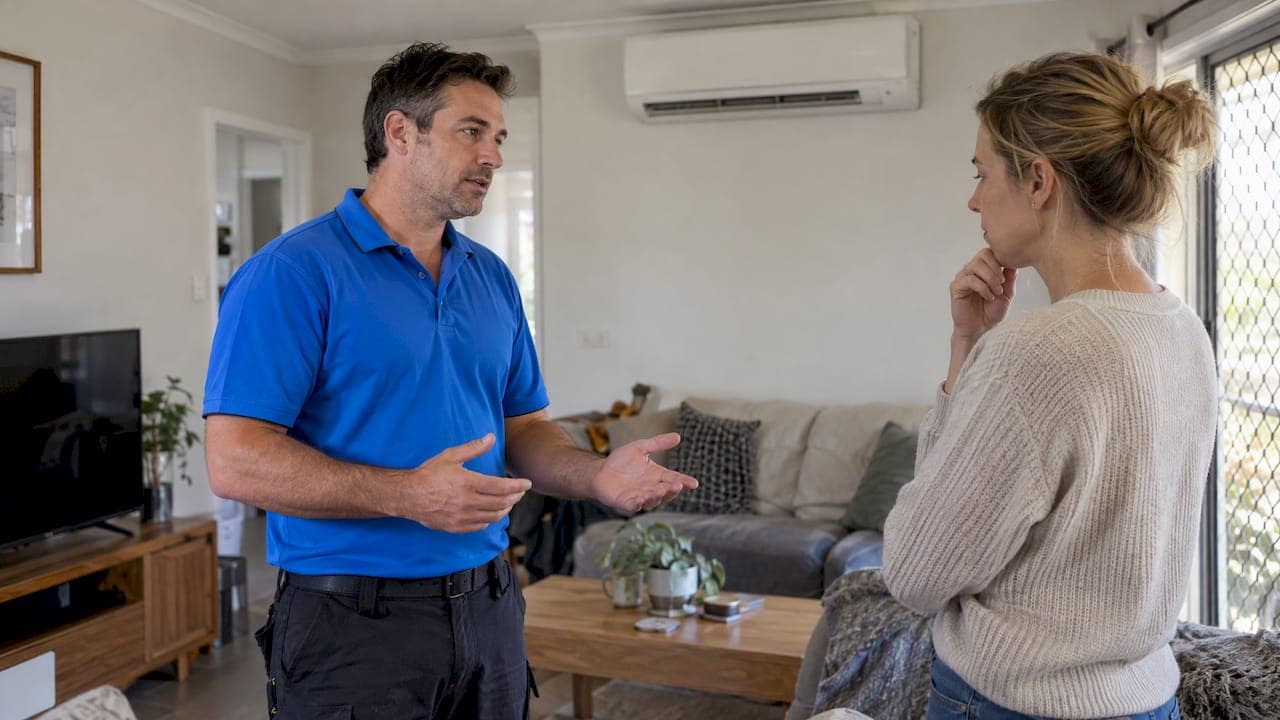
A call-out fee is a set charge a tradesperson applies simply for travelling to your property and assessing the problem, separate from any labour or parts needed for the repair itself. Whether that fee is payable if you decline the work depends on disclosure: if the business told you about the fee before the visit, you generally owe it, and some operators credit it toward the job if you proceed. The best protection is to ask for the fee amount and terms in writing before the technician arrives.
TL;DR:
- A credited fee reduces the final invoice if you approve the repair; a waived fee disappears, while a nonrefundable fee remains payable either way.
- After hours, weekends, public holidays, and travel beyond a service zone can add charges, so confirm the exact amount before accepting an appointment.
- Australian law sets no fee cap, but businesses must disclose prices beforehand; advertising no fee and then adding a diagnostic charge can mislead customers.
- Ask whether the fee includes time spent diagnosing the problem at your property, and confirm parts and repair labor are priced separately before approval.
Table of Contents
- 1. What a call-out fee covers and why it exists
- 2. When a call-out fee is charged if you decline the work, and why disclosure matters
- 3. Typical price ranges and what pushes a call-out fee higher
- 4. Consumer rights and disclosure under Australian Consumer Law
- 5. What to ask and confirm when you book, a short checklist
- 6. Short scenarios showing how call-out fees are commonly applied
- 7. How reputable operators display call-out fees
- 8. Fairness, transparency and the consumer experience
- How MyAirCare helps reduce surprise call-out fees
- FAQ
- Sources
1. What a call-out fee covers and why it exists
A call-out fee is designed to cover the cost of a tradesperson showing up, not the cost of fixing anything. It typically bundles a few components together rather than itemising each one separately.
- Travel time and vehicle costs: fuel, wear on the vehicle and the time spent driving to your address.
- Initial diagnostic or on-site time: the first period spent inspecting the problem before any repair work starts.
- Administrative overhead: scheduling, invoicing and the general cost of running a mobile service.
Pricing structures vary between businesses, as explained in this practical employer guide for recruitment in trades industries. Some charge a flat fee regardless of distance, others use zone or distance-based pricing that rises the further you are from their base. A practical industry guide notes that many operators also offer a minimum charge model, where the call-out fee is absorbed into the final bill once work begins. Tradespeople charge this fee because a wasted trip still costs them fuel, time and lost capacity to serve another customer that day.
2. When a call-out fee is charged if you decline the work, and why disclosure matters
Whether you pay the fee after declining a repair comes down almost entirely to what you were told beforehand. If a tradesperson clearly stated the call-out fee and its terms before attending, the charge is generally payable even if you decide not to proceed with the repair. Consumer Affairs Victoria's guidance on tradespeople and quotes explains that this outcome depends on the provider's policy, provided it was communicated clearly in advance.
The practical difference between a credited, waived and non-refundable fee matters here. A credited fee is deducted from the final invoice once you approve the job. A waived fee is dropped entirely, often as a goodwill gesture for simple call-outs that need no further action. A non-refundable fee stays payable no matter what you decide. None of these outcomes should come as a surprise, and asking for written confirmation of which applies before the visit protects both sides.

If a business advertises "no call-out fee" but then charges a separate diagnostic or assessment fee, that combination can amount to misleading conduct under the Australian Consumer Law. If you believe a fee was not properly disclosed, keep any booking messages or confirmation emails, raise the issue directly with the business first, and request a written explanation of how the fee was calculated.
3. Typical price ranges and what pushes a call-out fee higher
Call-out fees vary by trade, location and time of day, so it helps to know what drives the number up before you accept a quote.
A clearly disclosed call-out fee, credited toward the final job, is one of the simplest ways businesses avoid pricing disputes, according to Consumer Affairs Victoria's quoting guidance. That visibility matters because the same job can cost very differently depending on timing.
Daytime call-outs during standard business hours tend to sit at the lower end of a provider's pricing, while after-hours, weekend and public holiday visits commonly attract a surcharge on top of the base fee. The industry guide on setting call-out fees points out that emergency and after-hours visits carry materially higher costs for the business, including overtime pay and disruption to the day's scheduled jobs, which is why these callouts are often priced with a separate fee or a multiplier applied to the standard rate. Distance also plays a role: a job just outside a technician's usual service zone may carry an additional travel charge layered onto the base call-out fee. Publishing the hours that attract a premium, rather than leaving it to be explained on arrival, is one of the clearest ways a business can avoid disputes.

4. Consumer rights and disclosure under Australian Consumer Law
Businesses have a legal obligation not to mislead you about pricing, and that obligation covers call-out fees directly. Under the Australian Consumer Law, there is no fixed cap on how much a tradesperson can charge for a call-out, but a business must be clear about its pricing and must disclose call-out charges before the service is provided.
Beyond pricing disclosure, consumer guarantee laws protect you against services that are not carried out with due care and skill, and unfair contract term rules limit a business's ability to increase fees or change terms without notice. Contract terms that create a significant imbalance between the business and the customer can attract regulatory scrutiny.
If you think you have been charged unfairly or misled about a call-out fee, the ACCC's guidance on consumer rights and guarantees recommends raising the issue with the business first. If that does not resolve the matter, you can escalate to your state or territory consumer affairs office, or to the ACCC where the conduct may breach national consumer law.
5. What to ask and confirm when you book, a short checklist
A few questions at booking time prevent almost every call-out dispute. Run through these before you confirm an appointment.
- Ask the exact call-out fee amount and whether it includes any diagnostic time on site.
- Confirm whether the fee is credited toward the final bill if you approve the repair.
- Ask whether after-hours, weekend or travel zone charges apply to your booking.
- Ask whether parts costs are separate from labour and the call-out fee.
- Request written confirmation of all of the above, by text or email, before the technician arrives.
Pro Tip: Save the booking confirmation message. If a dispute arises later, it is the clearest evidence of what was agreed before the visit.
6. Short scenarios showing how call-out fees are commonly applied
A few brief examples show how these rules play out in practice.
- A technician attends, diagnoses a minor fault that needs no parts, and the business charges the flat call-out fee for the visit and diagnosis, with no further cost.
- A customer declines a quoted repair after the diagnosis; the call-out fee remains payable because it was disclosed at booking, though some businesses waive it for very simple visits.
- An after-hours emergency visit attracts both the standard call-out fee and a separate after-hours surcharge, communicated at the time of booking rather than on arrival.
- A booking confirmation typically reads along the lines of "Call-out fee: $90, includes first 15 minutes on site, credited to your invoice if you proceed with the repair."
7. How reputable operators display call-out fees
Operators that attract fewer disputes tend to follow the same pattern: publish the fee, state plainly what it covers, note whether it is credited, and list the hours that trigger a surcharge. Many also put the call-out fee on its own invoice line rather than folding it into a lump sum, and repeat the exact wording from the booking confirmation on the final invoice. That consistency, more than the fee amount itself, is usually what determines whether a customer feels fairly treated. Booking platforms that automate written confirmations and itemised invoices make this consistency easier to maintain across every job.
8. Fairness, transparency and the consumer experience
Most call-out fee disputes we see are not about the amount, they are about mismatched expectations. A customer hears "no call-out fee" on a website, then faces a diagnostic charge on arrival, and feels misled even when the business never intended to deceive anyone. Clear upfront wording protects tradespeople just as much as it protects customers, because it removes the awkward conversation on the doorstep. Before booking, ask for the fee in writing and keep that confirmation. It is the simplest safeguard either side has.
— Lewis
How MyAirCare helps reduce surprise call-out fees
For air-con cleaning businesses, the easiest way to avoid these disputes is to make the fee visible and consistent from the first booking message through to the final invoice. We built our platform around that exact problem.

- Automated booking confirmations send customers the call-out fee and its terms in writing the moment they book.
- Itemised invoices show the call-out fee as its own line.
- Integrated payments let customers pay the call-out fee or final invoice on the spot, reducing follow-up disputes over what was agreed.
If you run an air-con cleaning business and want to see how this looks in practice, our pricing page outlines the Free plan, MyAirCare Pro at $199 per month, and our booking fee structure.
FAQ
How much should an electrician charge for a call out?
Call-out fees vary by provider, location and time of day, and there is no fixed legal rate in Australia. Businesses must disclose the fee clearly before the visit, so the best way to know the cost is to ask directly at booking time.
How much should I charge for a late fee?
Late fees and call-out fees are different charges, and neither has a fixed amount set by law in Australia. A business setting either fee needs to disclose it clearly to customers in advance to avoid misleading conduct under the Australian Consumer Law.
How much can I charge for late fees in Australia?
There is no legislated cap on late fees for trade services in Australia, but the amount charged must be disclosed to customers beforehand and must not be misleading. Businesses should state any late or cancellation fees in writing at the time of booking.
How much does an electrician charge for a call-out fee?
The amount depends on the individual business, the time of day and the distance travelled, with after-hours and emergency visits typically costing more than standard daytime call-outs. Ask for the exact figure and what it covers before confirming your booking.
Sources
- Consumer Affairs Victoria — Giving quotes: tradespeople and small works
- ACCC — Consumer rights and guarantees
- Primemgr — Call-out fees and service call charges: how to set them