Ventilation and filtration, thermal comfort with personal control, daylight aligned to circadian rhythms, and acoustic management: these four levers drive the largest, most measurable gains when improving indoor environment quality and occupant productivity. The evidence is consistent enough to act on now.
A World Green Building Council meta‑analysis found productivity gains of roughly 8–11% when indoor air quality improves through better ventilation and lower pollutant loads. Regression tools such as H‑BEST translate these pillars into task‑performance estimates, letting you prioritise spend by expected return rather than guesswork.
Two actions you can take in the next 72 hours:
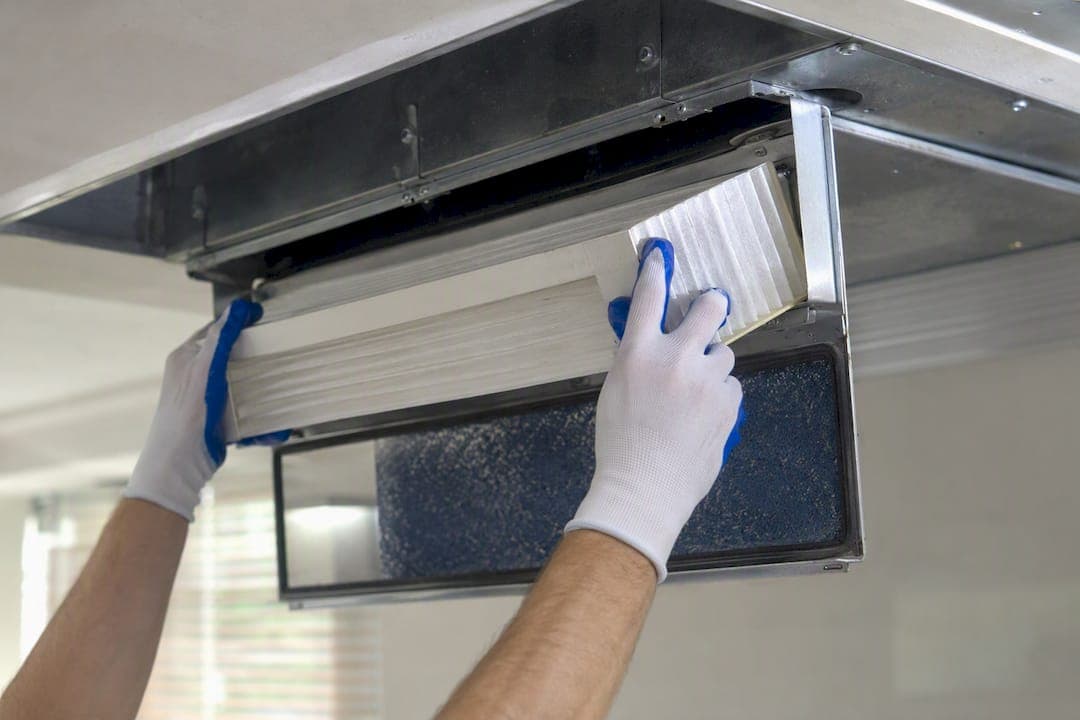
- Check HVAC filter condition and replace anything overdue or visibly clogged.
- Deploy a basic CO2 monitor in your worst‑performing rooms to establish a baseline.
Scheduling regular HVAC servicing through a platform like MyAirCare helps building operators lock in these gains rather than losing them to missed maintenance cycles.
Key Takeaways
Improving indoor environment quality and occupant productivity depends on prioritising ventilation, thermal agency, daylight design and acoustics together, not chasing one pillar in isolation.
| Point | Details |
|---|---|
| Air quality delivers the biggest number | Improved ventilation and filtration link to 8–11% productivity gains in meta‑analysis findings. |
| Personal control beats perfect uniformity | Desk fans and local thermostats often outperform a single building‑wide setpoint. |
| Daylight affects sleep, not just mood | EC glazing studies recorded longer sleep and notably higher cognitive scores. |
| Measure before you claim a win | Baseline CO2, PM2.5, temperature and sound before and after any intervention. |
| Maintenance protects the gains | Scheduling platforms like MyAirCare help prevent missed HVAC service cycles that erode IAQ improvements. |
Table of Contents
- What the research says about indoor air quality and productivity
- Indoor air quality: what to measure and what actually works
- What temperature range keeps occupants productive?
- How does lighting affect cognitive performance and sleep?
- Why does office noise hurt concentration more than volume alone suggests?
- How do you baseline and monitor indoor environment quality?
- How do you prioritise IEQ upgrades using H‑BEST?
- What maintenance keeps HVAC systems delivering on IAQ gains?
- What's a realistic 30 to 90 day plan for improving indoor environment quality?
- What trade‑offs matter most when prioritising IEQ upgrades?
- Keep your maintenance schedule from becoming the weak link
- Frequently asked questions
- Sources
What the research says about indoor air quality and productivity
The strongest evidence linking indoor environment quality to occupant outcomes comes from meta‑analyses that pool dozens of workplace studies rather than single trials. The World Green Building Council review found 8–11% productivity gains tied to improved ventilation and reduced pollutant concentrations, a range consistent across office types and climates.
The regression models behind H‑BEST go further, isolating each pillar's individual contribution. Their findings suggest ventilation improvements yield up to roughly 4% on task performance, temperature adjustments up to 4–6%, and horizontal illuminance up to 7% in certain task types. Noise proved harder to model with simple decibel readings alone, which tells you acoustic quality needs richer metrics than volume.
A systematic review identified 73 separate productivity models linking indoor environment quality to occupant outcomes, with thermal comfort appearing as a consistently prominent factor across them.
Three caveats matter before you lean too hard on any single figure:
- Studies vary by task type: cognitive work responds differently to lighting than repetitive manual tasks.
- Context shifts results: climate, building age and occupant demographics all skew outcomes.
- Before/after claims need rigorous baseline measurement, not casual before/after impressions.
Indoor air quality: what to measure and what actually works
Good indoor air quality starts with three metrics: carbon dioxide as a ventilation proxy, fine particulate matter (PM2.5), and volatile organic compounds (VOCs). CO2 above roughly 1,000 ppm signals inadequate fresh‑air exchange in most occupied spaces. PM2.5 should sit below 12 micrograms per cubic metre where practical, and VOC monitoring matters most after renovations, new furniture, or cleaning product changes. Relative humidity between 40% and 60% limits both mould growth and dust mite activity.
Harvard Health's practical guidance notes indoor air quality often worsens in winter, when ventilation drops as buildings seal up against cold. That seasonal dip is exactly when filtration and mechanical ventilation matter most.
A ranked intervention guide places two actions at the top of the priority list: upgrading to MERV‑13 filters for PM2.5 reduction, and installing energy or heat recovery ventilation (ERV/HRV) to manage CO2 without the energy penalty of unconditioned fresh air. Vented range hoods, low‑VOC furnishings and cleaning products, and source elimination generally outperform whole‑building purification, which is worth considering only after monitoring data shows it is genuinely needed.
| What to measure | Instrument | Sample location | Frequency |
|---|---|---|---|
| CO2 (ventilation proxy) | Handheld or fixed NDIR sensor | Breathing zone, central to room | Continuous or hourly |
| PM2.5 | Laser particle counter | Near occupant desks, away from vents | Continuous during occupied hours |
| VOCs | Photoionisation detector | After renovation or new furnishings | Spot checks, weekly during change periods |
| Relative humidity | Hygrometer | Central room location | Continuous |
Pro Tip: Opening windows feels like the obvious fix, but during wildfire smoke events or high outdoor pollution days it can make indoor air worse. Mechanical ventilation with proper filtration is more reliable when outdoor conditions are poor.
What temperature range keeps occupants productive?
Thermal comfort research consistently points to a neutral band around the low twenties Celsius for most seated office work, though the ideal setpoint shifts with clothing, activity level, and season. Task type matters too: cognitively demanding work tends to suffer more from thermal discomfort than routine administrative tasks.
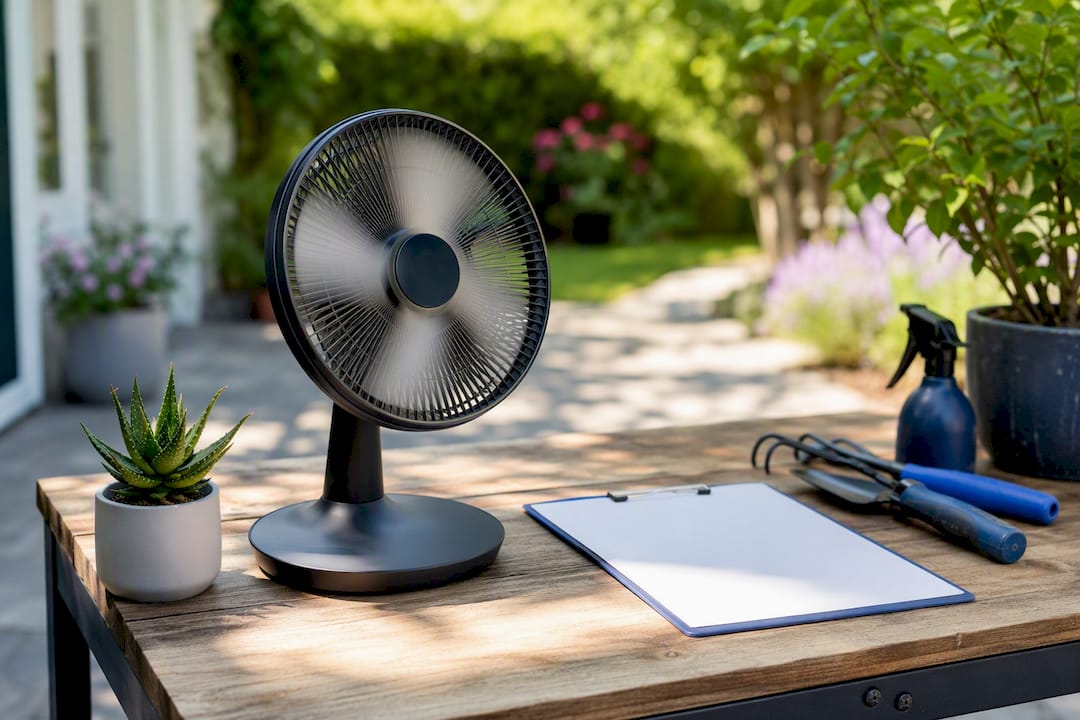
The bigger lever isn't finding one perfect number for the whole floor, but coordinating with property managers to implement occupant agency and micro-environment controls effectively. It's giving people some control over their own micro‑environment. Evidence summarised by the World Green Building Council suggests occupant agency, personal control over temperature and lighting, delivers measurable productivity and satisfaction gains, often more cheaply than chasing a single "perfect" building‑wide setpoint. The systematic review of 73 productivity models found thermal comfort a consistently important factor across nearly all of them.
Low‑cost tactics that give occupants agency without capital spend:
- Desk fans for individual airflow control.
- Zoned thermostats rather than one setpoint for an entire floor.
- Adaptive clothing policies that flex with seasonal temperature ranges.
- Local override switches on shared HVAC zones where the building system allows it.
For building managers, the operational sequence is: zone the building sensibly, program setpoints by occupancy schedule, then layer local overrides on top rather than trying to centrally micromanage comfort.
Pro Tip: Don't chase a uniformly perfect temperature across an open‑plan floor. Occupant agency, even something as simple as a desk fan, tends to outperform a "perfect" but inflexible central setpoint.
How does lighting affect cognitive performance and sleep?
Daylight access and lighting quality do more than reduce eye strain. They shape circadian rhythm, sleep quality, and next‑day cognitive performance in ways few building managers fully price into refurbishment decisions.
The metrics that matter here are equivalent melanopic lux (a measure of how light affects circadian signalling), plus horizontal and vertical illuminance for visual comfort. Design principles favour maximising genuine daylight and outdoor views, then layering electric lighting tuned to support circadian rhythm rather than just meeting a lux minimum on a desk.
The clearest evidence for how much this matters comes from a controlled workplace study using electrochromic (EC) glazing, glass that electronically tints to manage glare and heat while preserving outdoor views.
Participants in the optimised daylight and views condition using EC glazing slept longer per night and scored notably higher on cognitive assessments compared to the blinds condition, a statistically significant result.
That study tested office workers under two conditions: one with static blinds blocking glare and views, one with EC glass that tinted automatically while keeping sightlines to the outdoors intact. The gap between the two conditions is large enough that daylight strategy deserves serious weight in any refurbishment budget, not just a line item under "aesthetics."
Practical interventions, roughly in order of cost:
- Preserve and maximise existing daylight access and outdoor views wherever floor plans allow.
- Tune electric lighting schedules to support circadian rhythm rather than a flat lux target.
- Use shading that cuts glare without blocking views, passive design principles apply directly here.
- Consider EC glazing for high‑value refurbishments where glare and heat gain currently force occupants to close blinds permanently.
Why does office noise hurt concentration more than volume alone suggests?
Cognitive tasks, particularly ones involving language or complex reasoning, suffer disproportionately from speech noise compared to steady background hum. That's why raw decibel readings (dBA) tell only part of the story. Speech‑to‑noise ratio and the intelligibility of overheard conversation matter more for concentration than total volume.
Open‑plan offices typically target background noise around 45–50 dBA, with enclosed meeting rooms allowing slightly more tolerance since doors control intrusion. Once speech becomes intelligible from a neighbouring desk, distraction rises sharply regardless of the absolute decibel number.
Practical mitigation, cheapest first:
- Add soft furnishings, rugs, acoustic panels, upholstered furniture, to absorb reflected sound.
- Use desk screens or low partitions to break direct sightlines and reduce speech clarity between neighbours.
- Designate quiet zones separate from collaboration areas, and set meeting etiquette that keeps loud discussions out of open desking areas.
- Sound masking systems can help in larger floors where layout changes alone won't solve the problem.
Pro Tip: If occupant complaints about noise persist after soft‑furnishing fixes, commission a specialist acoustic assessment rather than guessing at further changes. Pair objective dBA readings with occupant surveys, perceived distraction often diverges from measured volume.
How do you baseline and monitor indoor environment quality?
You can't prove a productivity gain without a credible baseline. That means measuring before you change anything, not just after.
Essential sensors and placement:
| Metric | Target range | Instrument | Sensors per floor |
|---|---|---|---|
| CO2 | Below ~1,000 ppm | NDIR sensor | 1 per 100 m² |
| PM2.5 | Below ~12 µg/m³ | Laser particle counter | 1–2 per floor |
| Temperature | ~20°C (task dependent) | Digital thermometer/logger | 1 per zone |
| Illuminance | Task dependent, per design brief | Lux meter | Spot checks per workstation type |
| Sound level | 45–50 dBA (open plan) | Sound level meter | Spot checks, worst‑case locations |
The baseline and validation process follows a simple sequence:
- Plan the intervention and define what "success" looks like before touching anything.
- Measure baseline conditions for at least one to two weeks to capture daily variation.
- Implement the change, whether that's a filter upgrade or a lighting retrofit.
- Measure during and after the intervention using the same sensors and locations.
- Cross‑check with occupant surveys and simple productivity proxies like task completion time or self‑reported focus.
Calibrate sensors regularly and log at consistent intervals. Seasonal effects, particularly the winter ventilation dip Harvard Health notes, can distort short monitoring windows if you don't account for them.
How do you prioritise IEQ upgrades using H‑BEST?
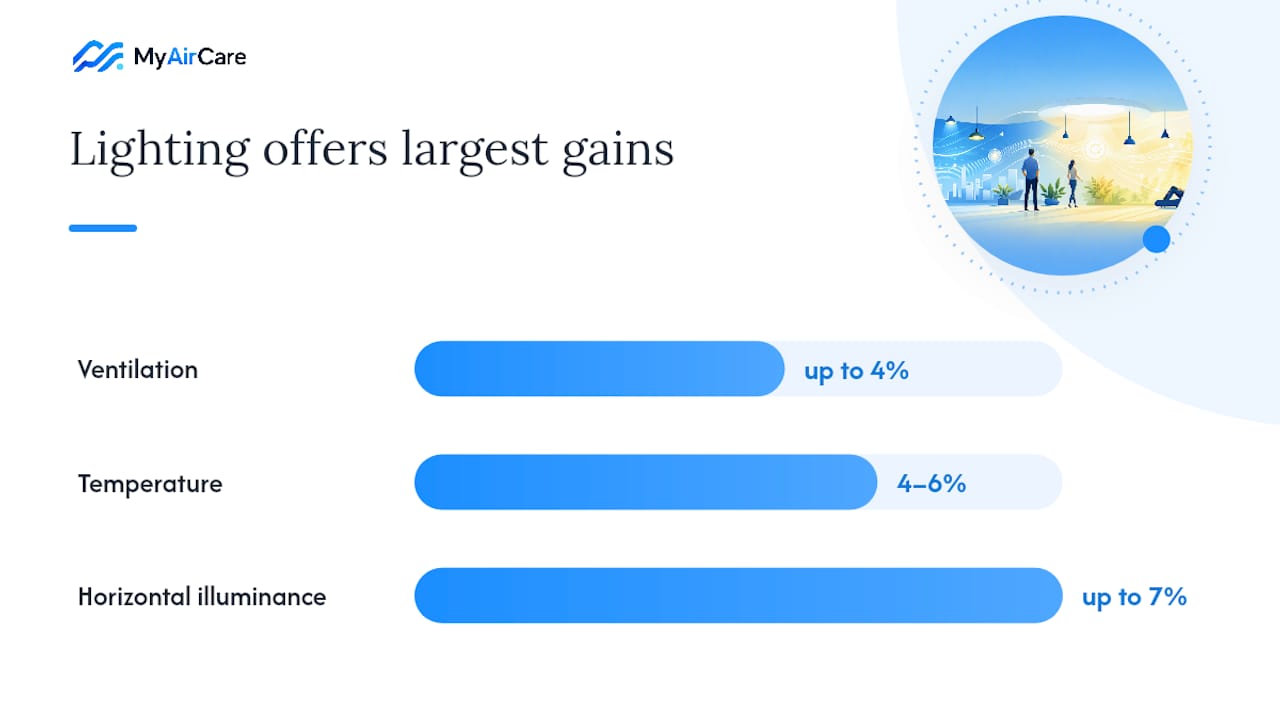
H‑BEST and similar regression meta‑analysis tools let you compare expected gains across ventilation, temperature, lighting and noise using the same modelling framework, rather than comparing apples to oranges across separate studies. The underlying regression data suggests ventilation improvements deliver up to roughly 4% task‑performance gains, temperature adjustments up to 4–6%, and horizontal illuminance up to 7% in specific task types.
Decision criteria for prioritising which fix comes first:
- Size of the problem: what does your monitoring data actually show is worst?
- Cost to fix: filter upgrades versus capital glazing retrofits sit at opposite ends.
- Disruption: can occupants stay in place, or does the fix require decanting a floor?
- Expected gain and payback period: use H‑BEST estimates to rank options by return.
A simple worked example: if 50 occupants each gain 20 minutes of focused time daily from better ventilation, that's roughly 16.7 occupant‑hours recovered per day. Multiply that by an average value per hour for the relevant role, and you get a defensible dollar figure for the capital case, adjust the inputs to your own headcount and role mix.
- Rank pollutants and conditions by severity using baseline monitoring.
- Fix the worst issue first, marginal returns are highest there.
- Use H‑BEST outputs to justify capital spend to finance stakeholders.
Pro Tip: Always fix the single worst‑performing condition first. A building with excellent lighting but poor ventilation gets far more return from an HVAC upgrade than from further lighting refinement.
What maintenance keeps HVAC systems delivering on IAQ gains?
Filter upgrades and daylight retrofits only pay off if the underlying HVAC system keeps running as designed. Maintenance discipline is what separates a one‑off improvement from a sustained one.
Core checklist:
- Inspect filters monthly, upgrade to MERV‑13 where the system's fan and pressure drop tolerance allows.
- Schedule coil and duct cleaning based on visible buildup or airflow drop, not just a fixed calendar date.
- Verify ventilation dampers are actually opening to designed positions, not stuck from age or corrosion.
- Check condensate drains for blockages that cause moisture problems and mould risk.
Before committing to a filter change, confirm compatibility with the existing HVAC unit's fan capacity, a higher‑MERV filter with more resistance can strain an underpowered fan.
Missed maintenance cycles are the most common way IAQ gains quietly erode. Scheduling and reminder platforms like MyAirCare help operators track service intervals and avoid the gaps that let filters run past their useful life.
Pro Tip: When scoping a service with a contractor, require before/after photos and filter or fan performance logging. It turns a vague "we serviced it" invoice into evidence you can act on.
| Point | Details |
|---|---|
| Filter cadence | Inspect monthly, replace before pressure drop or visible clogging degrades airflow. |
| Compatibility check | Confirm fan capacity before upgrading filter MERV rating. |
| Damper verification | Check ventilation dampers reach designed open positions each service visit. |
| Scheduling discipline | Platforms like MyAirCare reduce missed maintenance cycles through automated reminders. |
What's a realistic 30 to 90 day plan for improving indoor environment quality?
Weeks 0 to 2: establish baseline monitoring across CO2, PM2.5, temperature and sound. Action the quick wins immediately, filter change, a portable HEPA unit in the worst room, and basic occupant guidance on window use during poor outdoor air days
Weeks 3 to 6: move to targeted operational fixes, ventilation tuning, thermal zoning adjustments, shading changes. Communicate progress to staff and run pilot interventions in one zone before rolling out floor‑wide.
Weeks 7 to 12: make capital decisions backed by pilot data, procurement or retrofit work such as ERV/HRV upgrades or EC glazing where the numbers justify it. Validate results against your baseline and report outcomes to stakeholders.
- Facilities: own monitoring setup and quick wins (weeks 0–2).
- Facilities and HR: own communications and pilot rollout (weeks 3–6).
- Procurement and facilities: own capital decisions and final validation (weeks 7–12).
Pro Tip: Don't skip the pilot stage before committing capital. A single zone trial catches problems, like fan capacity limits or occupant pushback, before you've spent the full retrofit budget.
What trade‑offs matter most when prioritising IEQ upgrades?
The hardest part of this work isn't picking the right intervention. It's weighing an immediate, cheap operational fix against a slower capital project that might deliver a bigger number on paper.
My honest view: start with the operational wins every time, filter changes, CO2 monitoring, occupant agency tweaks, because they build the credibility and baseline data you need before anyone signs off on capital spend. Trying to sell a glazing retrofit to finance without months of monitoring evidence behind it is a hard conversation.
When communicating benefits upward, frame gains in terms finance and leasing teams already track: reduced absenteeism, improved measurable performance, and better tenant or employee retention. Raw percentage productivity figures land better paired with a dollar estimate specific to your occupancy.
Common barriers and quick mitigations:
- Budget constraints: sequence operational fixes first to build the case for capital spend.
- Tenant disruption: pilot in one zone before floor‑wide rollout.
- Measurement noise: extend baseline periods to smooth seasonal variation.
Keep your maintenance schedule from becoming the weak link
Every intervention in this guide, filter upgrades, ventilation tuning, monitoring, only holds up if the HVAC system behind it keeps running on schedule. That's where a lot of good IAQ plans quietly fall apart: not from bad design, but from a missed service call nobody caught in time.

MyAirCare gives air‑con cleaning businesses a way to run bookings, reminders, and payments from one system, which means fewer missed service intervals and less admin chasing customers for appointments. For building managers relying on outside contractors to maintain the filtration and ventilation gains covered above, working with a provider who runs on this kind of scheduling system reduces the risk of a lapsed service slipping through. If you manage air‑con cleaning tenders or recurring servicing contracts, explore how MyAirCare handles scheduled tenders and see whether it fits how your maintenance program runs.
Frequently asked questions
What is the fastest way to improve indoor environment quality and occupant productivity? Start with ventilation and filtration. Checking HVAC filters and deploying basic CO2 monitoring costs little, takes days rather than months, and directly targets the pillar with the strongest documented productivity link.
How much can indoor air quality improvements boost productivity? Meta‑analysis evidence from the World Green Building Council puts typical gains at 8–11% when ventilation improves and pollutant concentrations drop, though individual results vary by building and task type.
Does giving occupants personal control over temperature really matter? Yes. Occupant agency, desk fans, local thermostats, adjustable shading, consistently correlates with better satisfaction and productivity outcomes than trying to maintain one uniform temperature across an open‑plan floor.
What should building managers measure to track indoor environment quality? CO2 as a ventilation proxy, PM2.5, VOCs during change periods, temperature, relative humidity, illuminance, and sound levels. Baseline each metric before making changes so before/after comparisons hold up.
Is electrochromic glazing worth the cost for improving occupant productivity? It suits situations where glare currently forces occupants to keep blinds permanently closed.
Sources
- New report links office design with staff health and productivity — World Green Building Council
- The impact of optimized daylight and views on the sleep duration and cognitive performance of office workers — PMC
- Regression meta‑analysis relating IEQ conditions to task performance (H‑BEST basis) — DOI 10.1155/ina/6840369
- Easy ways you can improve indoor air quality — Harvard Health