
When you open a Safety Data Sheet, check four things before anything else: the product name in Section 1, the emergency telephone number, the revision date in Section 16, and the hazard summary in Section 2. If any of those are missing, unclear, or the SDS is older than five years, stop work and escalate before proceeding.
A Safety Data Sheet (SDS) is a standardised document that suppliers of hazardous chemicals must provide under Australia's Work Health and Safety (WHS) Regulations. It replaced the older Material Safety Data Sheet (MSDS) format and follows a mandatory 16-section structure. Knowing how to read an SDS correctly is not optional in an Australian workplace — it is a legal and practical requirement.
First 60-second checks when you open any SDS:
- Confirm the product name in Section 1 matches the container label exactly.
- Locate the Australian emergency telephone number — it must be reachable after hours.
- Check the revision date in Section 16. If the SDS has not been reviewed within the past five years, treat it as potentially out of date.
- Read the hazard summary in Section 2 before handling the product.
- Verify the SDS is written in English and uses Australian units.
Stop conditions — do not proceed if any of these apply:
- No Australian emergency telephone number is listed.
- Section 2 (hazard identification) is blank or missing.
- The SDS is undated or the revision date is more than five years ago.
- The document is not in English.
- The product name on the SDS does not match the container.
Key takeaways
An SDS is only useful if it is current, compliant, and read before work begins — not after an incident occurs.
| Point | Details |
|---|---|
| Check four things first | Confirm product identity, emergency phone, revision date, and Section 2 hazard summary before any handling. |
| Priority sections | Sections 1, 2, 4, 7, 8, and 16 cover the information needed for daily operations and emergency response. |
| GHS category numbers | Lower category numbers indicate higher hazard severity; Category 1 is more hazardous than Category 4. |
| Australian compliance | A valid SDS must be in English, use Australian units, carry an Australian after-hours emergency number, and show a revision date within five years. |
| Escalation triggers | Missing Section 2, no Australian emergency number, or an SDS older than five years are stop conditions requiring supervisor notification. |
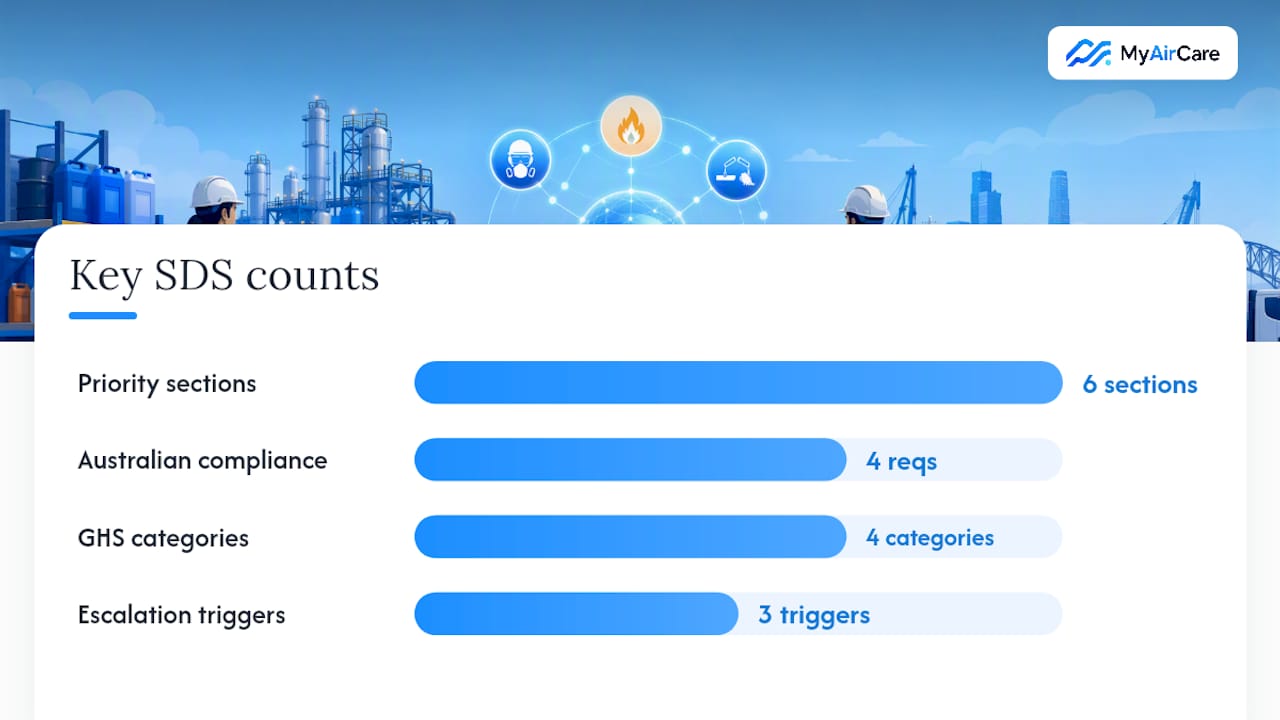
Table of Contents
- What does each of the 16 SDS sections contain?
- Which SDS sections should you prioritise at work?
- How do GHS hazard categories, pictograms and signal words work?
- Does your SDS meet Australian compliance requirements?
- How to use an SDS to control risk and respond to incidents
- What do common SDS terms and abbreviations mean?
- On-site SDS quick checklist
- When SDSs fall short: a practitioner's perspective
- Sources
What does each of the 16 SDS sections contain?
Safe Work Australia confirms that all SDSs in Australia must follow the standardised 16-section format set out in Schedule 7 of the WHS Regulations. The sections always appear in the same order, which makes it possible to locate critical information quickly regardless of the product.
- Identification — Product name, recommended uses, supplier name, Australian address, and emergency telephone number.
- Hazard identification — GHS classification, signal words, hazard and precautionary statements, and pictograms.
- Composition/information on ingredients — Chemical identity, CAS numbers, and concentration ranges for hazardous ingredients.
- First-aid measures — Instructions for eye contact, skin contact, inhalation, and ingestion; notes on symptoms and whether medical attention is needed.
- Firefighting measures — Suitable extinguishing media, specific hazards from combustion, and protective equipment for firefighters.
- Accidental release measures — Spill containment, clean-up procedures, and environmental precautions.
- Handling and storage — Safe handling practices, storage conditions, incompatible materials, and ventilation requirements.
- Exposure controls/personal protective equipment — Workplace exposure standards (TWA, STEL), engineering controls, and required PPE.
- Physical and chemical properties — Appearance, odour, pH, flash point, vapour density, boiling point, and flammability limits (LEL/UEL).
- Stability and reactivity — Conditions to avoid, incompatible materials, and hazardous decomposition products.
- Toxicological information — Routes of exposure, acute and chronic health effects, and LD50 values where available.
- Ecological information — Environmental fate, aquatic toxicity, and persistence data.
- Disposal considerations — Safe disposal methods and relevant regulations.
- Transport information — UN number, proper shipping name, hazard class, and packing group.
- Regulatory information — Australian-specific legislation and classification references.
- Other information — Revision date, version number, and the GHS edition used for classification.
Sections 1, 2, 4, 7, and 8 are the most likely to contain information needed for day-to-day operations and immediate incident response.
Which SDS sections should you prioritise at work?
Not every section demands equal attention in every situation. The nine sections below cover the information most relevant to routine tasks, risk assessments, and emergency response.
Section 1: identification
Confirm the product name matches the container before anything else. Section 1 also holds the supplier's Australian address and the emergency telephone number. That number must be contactable after hours — a business-hours-only number does not meet the requirement under the Code of Practice for preparing SDSs. If the number connects to a voicemail or is disconnected, escalate before use.
Section 2: hazard identification
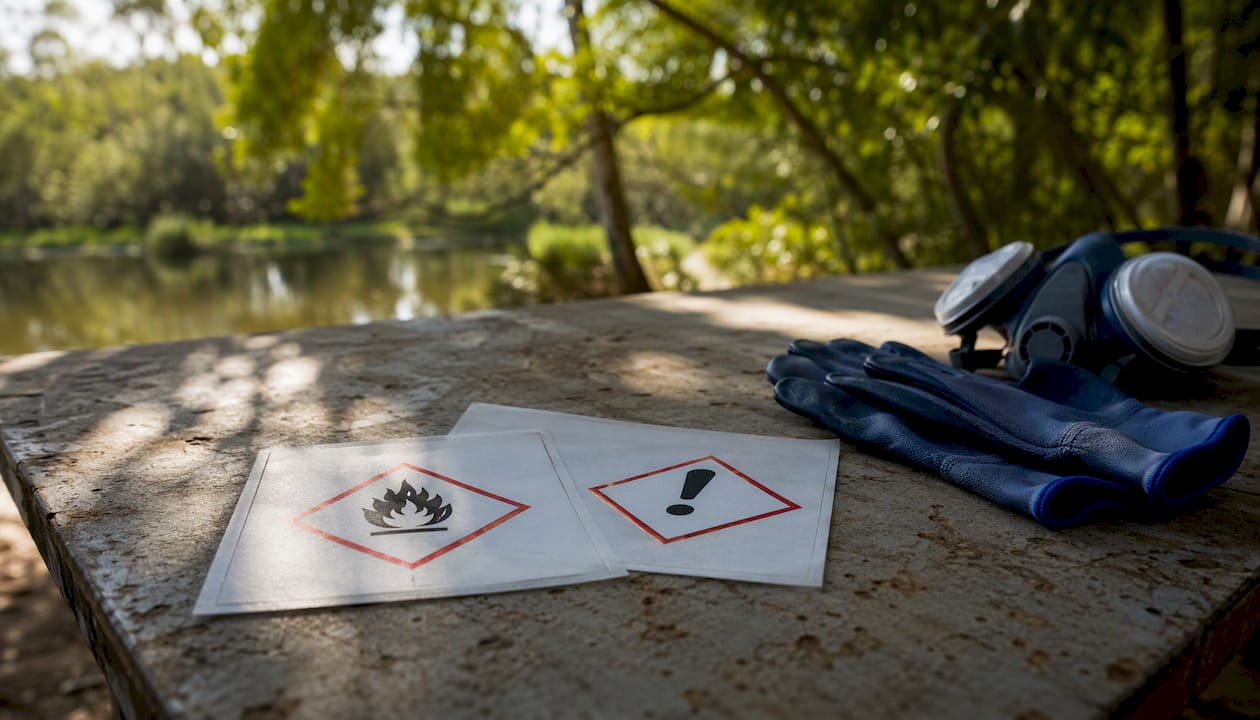
This section tells you the GHS classification, signal word (Danger or Warning), hazard statements (H-codes), and precautionary statements (P-codes). A product labelled "Danger" carries a higher hazard than one labelled "Warning." Read the H-statements carefully — they describe the specific nature of the hazard, such as "H225: Highly flammable liquid and vapour" or "H302: Harmful if swallowed."
Section 4: first-aid measures
Section 4 gives route-specific first-aid instructions. Check whether the SDS specifies that medical attention is required, and note any symptoms that may be delayed. If the instructions say "seek immediate medical attention," that phrase should appear on any quick-reference card for the product.
Section 7: handling and storage
- Check for incompatible materials — products that must not be stored together.
- Note ventilation requirements and any temperature or humidity limits.
- Identify whether the product requires a specific storage class (flammable, corrosive, oxidiser).
- Confirm that current storage arrangements match what Section 7 requires.
Section 8: exposure controls and PPE
Section 8 lists the Workplace Exposure Standard (WES) for each hazardous ingredient, expressed as a TWA (time-weighted average) or STEL (short-term exposure limit). It also specifies the minimum PPE required: glove type, eye protection, respiratory protection, and protective clothing. The PPE listed here is the minimum — site conditions may require more.
Section 9: physical and chemical properties
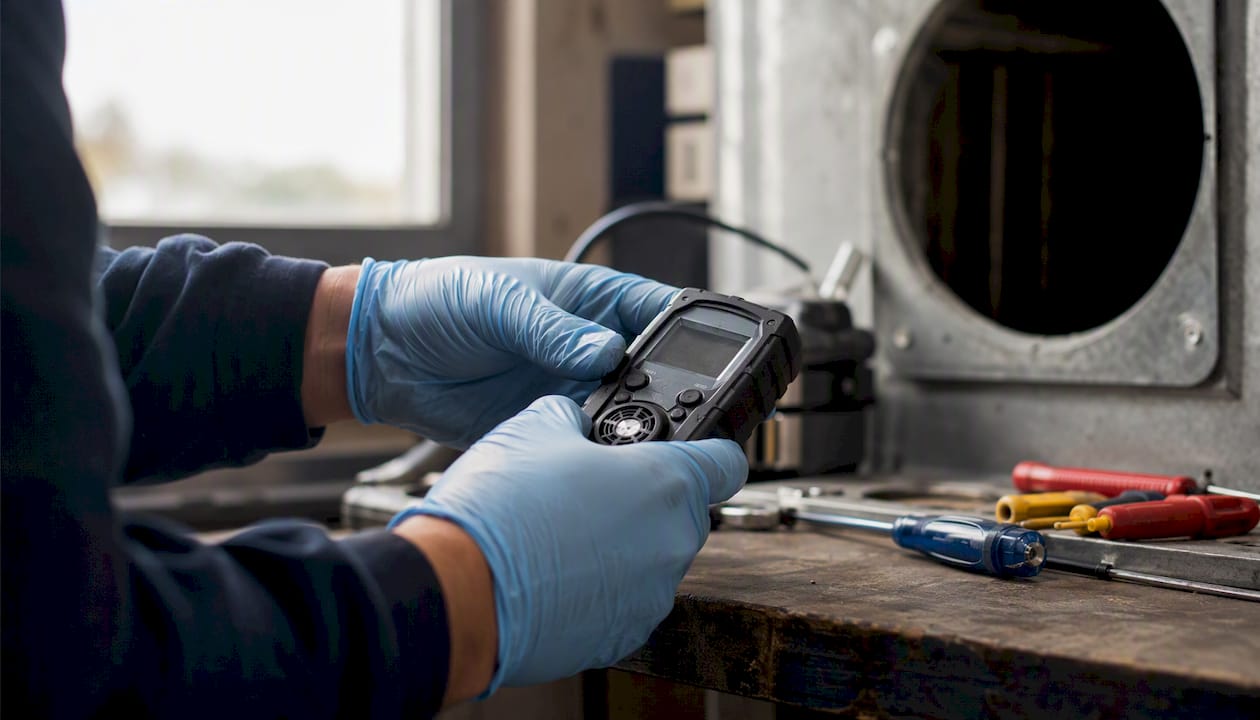
Values in Section 9 directly affect monitoring and confined-space decisions. Vapour density greater than 1 means the vapour is heavier than air and will tend to sink and accumulate in low points such as pits, trenches, and enclosed spaces. A low flash point signals a higher ignition risk. Practitioners link these values directly to gas detection thresholds and confined-space controls.
Section 10: stability and reactivity
This section identifies conditions that could cause a dangerous reaction: heat, moisture, contact with acids or oxidisers. Check it before storing a new product or when investigating an incident involving unexpected fumes or heat.
Section 11: toxicological information
Section 11 covers acute and chronic health effects by route of exposure (inhalation, skin, ingestion, eye). LD50 values appear here — a lower LD50 indicates higher acute toxicity. This section is relevant for health monitoring decisions and for briefing workers on long-term exposure risks.
Section 16: other information
The revision date and version number sit in Section 16. SDSs must be reviewed and updated at least every five years. A document with no revision date, or one that has not been updated within that period, may not reflect current classification requirements and should be verified with the supplier before use.
Pro Tip: Assign one person on each shift to confirm Sections 1, 2, and 16 before a new product is used for the first time. If the emergency number is unreachable or the revision date is missing, that person has clear authority to stop work and contact the supplier. This single step catches the majority of avoidable SDS compliance failures.
How do GHS hazard categories, pictograms and signal words work?
The Globally Harmonized System (GHS) provides the classification framework used in Australian SDSs. The WHS Regulations reference the 7th revised edition of the GHS for classification and hazard communication, and the Safe Work Australia classification and labelling poster maps pictograms to signal words and hazard statements.
Signal words and what they mean:
- Danger — assigned to the more severe hazard categories (typically Category 1 and 2). Immediate and strict controls are required.
- Warning — assigned to less severe categories (typically Category 3 and 4). Controls are still required but the risk level is lower.
Hazard category numbers and severity:
Category numbers run from 1 upward, and a lower number means a higher hazard. For acute toxicity, Category 1 can be fatal while Category 4 is harmful. This is a common source of confusion — workers sometimes assume that "Category 1" is the safest, as with star ratings. It is the opposite.
Common pictograms and the controls they imply:
- Flame — flammable liquid, gas, or solid. Eliminate ignition sources, use explosion-proof equipment, and store away from heat.
- Skull and crossbones — acute toxicity (Category 1–3). Strict PPE, avoid inhalation and skin contact, and have antidote or treatment information ready.
- Exclamation mark — irritant, harmful, or sensitiser (less severe categories). Ventilation and basic PPE are required.
- Corrosion — skin or eye corrosion, or metal corrosion. Chemical-resistant gloves and face protection are mandatory.
- Health hazard — carcinogen, reproductive toxin, respiratory sensitiser, or organ toxicant. Long-term exposure controls and health monitoring apply.
- Environment — aquatic toxicity. Prevent product from entering drains or waterways.
- Gas cylinder — compressed gas. Secure cylinders upright and keep away from heat.
- Exploding bomb — explosive or self-reactive. Specialist handling and storage conditions apply.
H-statements and P-statements in practice:
H-statements (hazard statements) describe the nature and degree of the hazard. P-statements (precautionary statements) describe the response. For example, H314 ("Causes severe skin burns and eye damage") paired with P280 ("Wear protective gloves/protective clothing/eye protection/face protection") tells a worker exactly what protection to use before contact. When selecting controls, match the P-statements in Section 2 against the PPE listed in Section 8 — they should be consistent.
Does your SDS meet Australian compliance requirements?
The Code of Practice for preparing SDSs sets out mandatory content for each section and specifies administrative requirements that apply to every SDS used in an Australian workplace.
Mandatory items under the WHS Regulations and Code of Practice:
- All 16 sections present and in the correct order.
- Written entirely in English.
- Australian units used where applicable (degrees Celsius, kilopascals, mg/m³).
- Supplier's Australian name and physical address.
- Australian emergency telephone number, contactable after hours.
- Revision date and version number in Section 16.
- Reference to the GHS edition used for classification.
- Hazard classification consistent with Australian WHS Regulations.
SDS compliance audit checklist:
Red flags that require escalation:
- The SDS is written in a language other than English, or uses non-Australian units (Fahrenheit, psi without conversion).
- No Australian emergency telephone number, or the number listed is overseas.
- Section 2 is blank, states only "not classified," or lacks H-statements for a clearly hazardous product.
- The revision date is absent or more than five years old.
- The supplier address is overseas with no Australian distributor listed.
- The SDS references an outdated GHS edition without noting Australian alignment.
Many SDSs used in Australian workplaces fail compliance checks for avoidable administrative reasons — an out-of-date revision date, a missing after-hours number, or units that do not match Australian standards. These failures are straightforward to catch with a structured audit at the point an SDS enters the workplace register.
An overseas SDS is not acceptable for use in an Australian workplace without local review. A supplier's international SDS may use different classification systems, different units, and will not carry an Australian emergency number. The supplier or an Australian distributor must provide a compliant version.
How to use an SDS to control risk and respond to incidents
Pre-task checks for normal operations
- Retrieve the current SDS from the workplace register before starting work with any hazardous chemical.
- Confirm the product name and batch match the container (Section 1).
- Read Section 2 for the hazard classification and signal word.
- Select PPE from Section 8 and confirm it is available and in serviceable condition.
- Check Section 7 for handling precautions: ventilation, temperature limits, and incompatible materials.
- Note the emergency telephone number from Section 1 and confirm it is reachable.
Incident and emergency response
- Inhalation, skin, or eye exposure: Follow Section 4 first-aid instructions for the specific route of exposure. If the SDS states "seek immediate medical attention," do not delay.
- Fire: Use only the extinguishing media listed in Section 5. Note any hazardous combustion products that firefighters or first responders need to know about.
- Spill or release: Follow Section 6 containment and clean-up procedures. Check Section 10 for reactivity hazards before applying any clean-up agent.
- Suspected poisoning: Contact the Poisons Information Centre on 13 11 26 (Australia-wide, 24 hours). Have the SDS available to read from, but note that the Centre may need additional product information beyond what the SDS contains.
Training, registers, and administrative steps
- Maintain an SDS register for every hazardous chemical on site. The register must be accessible to all workers, including during an emergency.
- Produce quick-reference cards for commonly used products that summarise the key hazards, PPE, first-aid steps, and emergency number. These reduce decision time during an incident.
- Store SDSs digitally where possible, with a backup printed copy accessible in the work area.
- When SDS information is insufficient — for example, if ingredients are listed as "proprietary" with no further detail — contact the supplier directly and request a full disclosure under WHS Regulations. If the supplier cannot provide adequate information, escalate to the relevant state WHS regulator.
What do common SDS terms and abbreviations mean?
The following terms appear frequently across SDSs. Understanding them allows workers to interpret critical values without specialist training.
- TWA (Time-Weighted Average): The average airborne concentration of a substance over an eight-hour working day. Exposure should remain below this value.
- STEL (Short-Term Exposure Limit): The maximum concentration permitted for a continuous 15-minute exposure period. Exceeding the STEL, even briefly, requires immediate action.
- LEL (Lower Explosive Limit): The minimum concentration of vapour in air at which ignition can occur. Below the LEL, the mixture is too lean to ignite.
- UEL (Upper Explosive Limit): The maximum concentration at which ignition can occur. Above the UEL, the mixture is too rich to ignite — but reaching the UEL in a confined space is extremely dangerous.
- Vapour density: Expressed relative to air (air = 1). A vapour density greater than 1 means the vapour sinks and accumulates in low points. A value less than 1 means it rises and disperses more readily.
- Flash point: The lowest temperature at which a liquid produces enough vapour to ignite. A low flash point (below 23°C) indicates a highly flammable product requiring strict ignition control.
- LD50: The dose lethal to 50% of a test population, expressed in mg/kg. A lower LD50 indicates higher acute toxicity.
- H-statements: Standardised hazard statements assigned a code (e.g., H301, H314). Each code has a fixed meaning under the GHS.
- P-statements: Standardised precautionary statements (e.g., P260, P280) that specify prevention, response, storage, and disposal actions.
- CAS number: A unique numerical identifier for a chemical substance, used to confirm identity across different product names.
Unit notes for Australian workplaces: Concentrations in air appear as mg/m³ or ppm. Pressure may appear as kPa or mm Hg. Temperature is always in degrees Celsius on a compliant Australian SDS. When a value appears in non-metric units, the SDS may not be compliant for Australian use.
Quick rules of thumb:
- Vapour density greater than 1: increase low-level ventilation and monitor confined spaces at floor level.
- Flash point below 23°C: treat as highly flammable; eliminate all ignition sources before handling.
- TWA or STEL listed: use the value to set air monitoring thresholds and confirm ventilation is adequate.
On-site SDS quick checklist
Use this checklist before working with any hazardous chemical. Copy it onto a laminated card or add it to a digital SDS register entry.
Instructions for "No" answers:
- A single "No" on product identity, emergency phone, revision date, or Section 2 is a stop condition. Isolate the product, notify the supervisor, and contact the supplier before any further handling.
- A "No" on PPE or storage does not require stopping all work, but the deficiency must be corrected before the task proceeds.
- Document every "No" finding in the SDS register and record the corrective action taken.
When SDSs fall short: a practitioner's perspective
SDSs are designed for workplace hazard management, not clinical toxicology. That distinction matters in practice. A 2026 study found that SDSs are often insufficient for managing acute poisoning cases and that professionals vary considerably in how they interpret SDS detail. The paper recommends training and the use of supplementary resources, particularly the National Poisons Register and Poisons Information Centre specialists.
This does not mean SDSs are unreliable — it means they have a defined purpose and defined limits. An SDS tells a worker how to handle a product safely in a workplace context. It is not designed to guide a clinician treating an overdose, and it should not be the sole resource in a poisoning emergency.
Common problems observed in Australian workplaces include SDSs that list ingredients as "proprietary blend" without further detail, documents that have not been updated since the transition from the MSDS format, and overseas SDSs that have been used without local review. The Code of Practice is clear that vague language is not acceptable — if data is unavailable, the SDS must state "no data available" explicitly rather than substituting phrases like "safe under normal conditions."
Practical mitigations are straightforward. An SDS register with a review date field catches out-of-date documents before they cause a problem. Quick-reference cards for commonly used products reduce the chance of a worker making a decision from memory during an incident. Integrating an SDS check into existing permit-to-work or pre-start checklists means the review happens as a matter of routine, not only when something goes wrong.
Pro Tip: Add an SDS currency check to your permit-to-work or pre-start form as a mandatory field. If the SDS is more than five years old or the emergency number is not reachable, the permit does not proceed. This single administrative control eliminates the most common category of SDS non-compliance.
Sources
The following sources provide authoritative guidance on SDS requirements and chemical safety in Australia.
- Understanding safety data sheets for hazardous chemicals | Safe Work Australia
- Preparation of safety data sheets for hazardous chemicals — Code of Practice (extract)
- Safety data sheets – how useful are they in managing acute non-workplace poisoning? (2026 study)
- Are Your Safety Data Sheets Actually Compliant? SDS Validation in Australia | DGXprt
When SDS information is incomplete — particularly when ingredients are listed as proprietary — contact the supplier and request full disclosure under the WHS Regulations. If the supplier does not respond adequately, the relevant state WHS regulator is the appropriate escalation point. For poisoning emergencies, the Poisons Information Centre at 13 11 26 is the first call, not the supplier.